
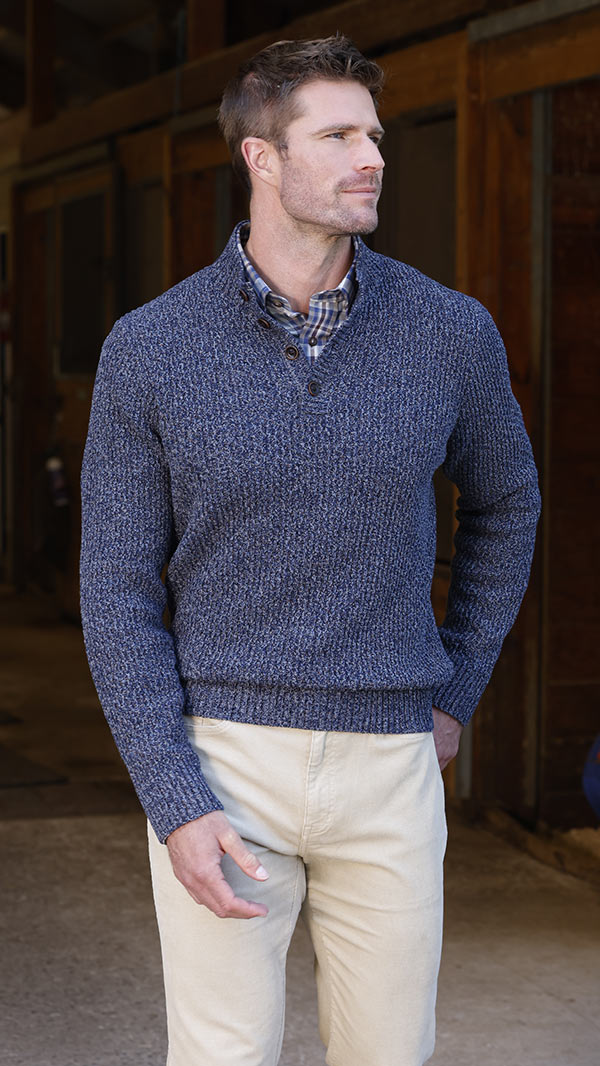

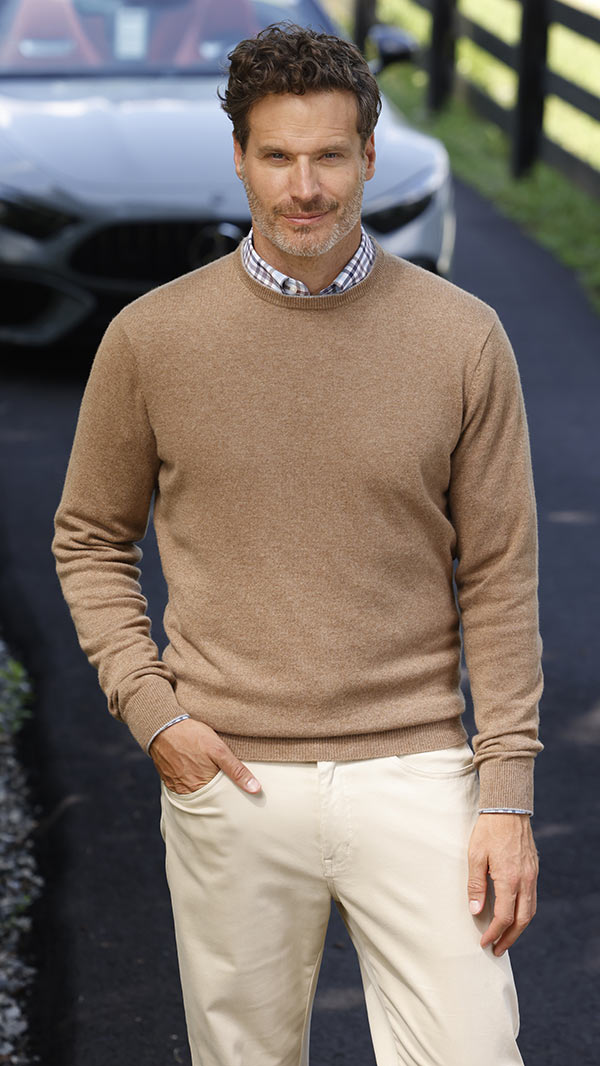

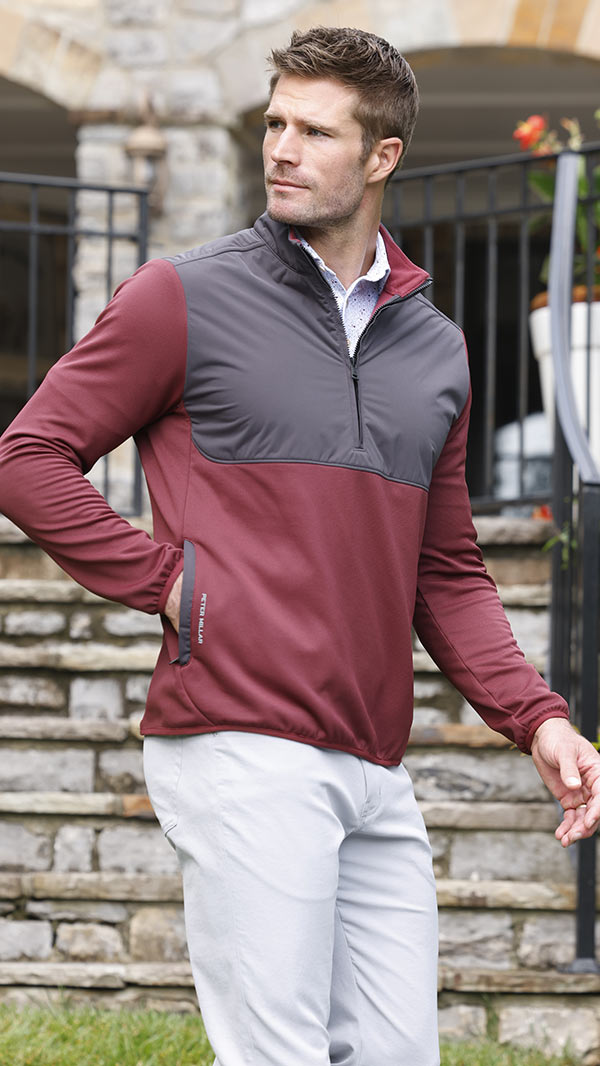



Business casual is the dress code most offices run on, and it's one of the hardest to get right as a big and tall man. The rules are loose, and most business casual clothing is cut for an average frame. So you get shirts that balloon at the waist, pants that sit too low and blazers that pull across the shoulders. This guide covers business casual for big men from start to finish: what it means, six outfits that work, and how to fix the fit problems that show up on a bigger or taller body.
What business casual means for a big and tall man
Business casual is a collared shirt, tailored pants or chinos, and leather shoes, with a sport coat or sweater when the day calls for it and no tie. That definition is the same at every size. What changes for a big and tall man is fit: room through the chest, shoulders and middle, with the right length in the sleeve, the shirt body and the trouser leg. Buying a size up to get chest room is the most common mistake. It adds fabric everywhere else, and a larger frame shows every extra inch.
Six business casual outfits for big men
Each of these works from a short list of pieces. Swap colors to suit your office, and use the fit checks further down before you buy.
1. The client meeting
Navy sport coat, light blue button-down, charcoal dress pants, brown belt and dark brown oxfords. It looks sharp without the formality of a suit. Button the jacket when you stand and unbutton it when you sit.

2. The untucked office day
A no-tuck oxford worn out over khaki chinos, with brown loafers. A no-tuck shirt is cut shorter than a dress shirt, so it lands at the hip. Westport No-Tuck comes in three lengths: big sizing up to 6 feet, mid-tall from 6'1" to 6'4", and tall over 6'4".

3. The cold-office layer
A quarter-zip or half-zip over a button-down, olive chinos and brown leather boots. The collar of the shirt keeps it professional, and the knit adds warmth without a jacket. Our quarter-zip guide covers the fabric choices.

4. The soft-blazer Friday
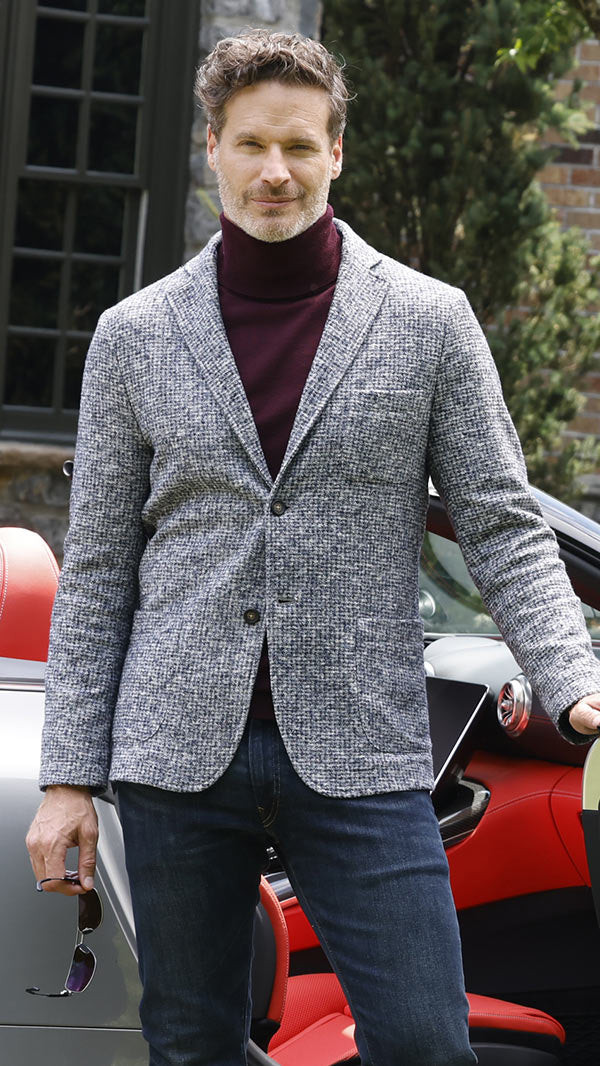
A knit blazer over a polo or crew-neck, dark jeans and suede loafers. A knit blazer has the lapels and buttons of a sport coat and the stretch of a sweater, which makes it easy to wear through a full day at a desk.

5. The presentation
Charcoal sport coat, white dress shirt, navy trousers and black shoes. Add a pocket square if your office wears them. This is the closest business casual gets to a suit, so it's the one to reach for when you're in front of the room.
6. The summer standby
A stretch performance polo, lightweight navy chinos and leather loafers with no-show socks. Look for moisture-wicking knits that keep their shape through the afternoon. The polo should fit cleanly through the shoulders and chest with no pull across the buttons.
Fit fixes for a bigger frame
The shirt is too long to wear untucked
A dress shirt cut to tuck hangs past the seat when you wear it out. Tuck it, or switch to a no-tuck cut in the length that matches your height. The hem should cover your belt when you raise your arms and stop around the middle of your zipper. Our dress shirt fit guide covers neck and sleeve sizing.
The shirt pulls across the middle
If the buttons strain at the stomach but the chest fits, you need a big size, which adds room through the body, and not a longer shirt. A shirt that falls straight from the chest looks cleaner than one that hugs the midsection. Darker solids and small, tight patterns are the easiest to wear here.
The pants slide down
That's a rise problem. The rise is the distance from the waistband to the crotch seam, and pants cut for bigger builds give you more of it so the waistband stays at your natural waist. Our chinos fit guide walks through rise, seat and break.
The blazer gaps at the button
If the front pulls into an X when buttoned, the jacket is too small in the chest. Buy the size that fits your shoulders and chest, then have the waist adjusted by a tailor. Shoulder seams should end at the edge of your shoulder, and the sleeve should show about a quarter-inch of shirt cuff.
The undershirt shows
Wear a V-neck undershirt under open-collar shirts. Light gray disappears under a dress shirt better than white.
Fabrics that hold up through a workday
A larger frame puts more stress on seams and shows wrinkles across more fabric, so cloth matters. Performance blends with stretch, like the gabardine trouser above, move when you sit, drive and reach, and they come out of an eight-hour day looking close to how they went in. Cotton twill and oxford breathe well and look classic, and a little stretch in the weave helps them keep their shape. Merino wool knits regulate temperature, so a sweater or knit blazer works in a cold conference room and on the walk to lunch.
Very thin cotton clings and shows every contour. Pure linen wrinkles fast, so save it for summer weekends or choose a linen blend. Shiny fabrics draw attention to the surface of the garment. Solid, matte cloth in a medium weight gives the cleanest line on a big frame.
Business casual questions, answered
What is business casual for overweight or heavier men? The same dress code as for anyone else. The difference is fit. Buy for your chest and middle, choose shirts that fall straight instead of clinging, and wear pants with enough rise to sit at your natural waist.
Can a big guy wear a polo for business casual? Yes, in most offices. Pick a solid or quiet stripe, keep it tucked or choose one with a straight hem, and pair it with chinos, not shorts.
Are jeans business casual? Dark, clean jeans with no fading work in many offices, especially with a blazer or a collared shirt. Save lighter washes for the weekend.
Tucked or untucked? Both are business casual. Tuck a dress shirt. Leave a no-tuck shirt, polo or sweater out.
What colors work best? Navy, charcoal, olive and burgundy for pants and jackets. Light blue and white for shirts. They mix with each other, so a small wardrobe covers a full week.
Shop Big & Tall Business Casual
No-tuck shirts, dress pants, sport coats and layers from Westport, Peter Millar and Polo Ralph Lauren, cut for big and tall men.
